Humility Isn't What You Think It Is
Jun 24, 2026💭 Go deeper: We talk more about this in episode #272 of the Joy Lab Podcast
Humility is not weakness. It's not shrinking yourself, performing modesty, or self-deprecating your way through life. It's an accurate, grounded sense of self, what researcher Dr. Daryl Van Tongeren calls "right-sizing." You own your strengths and your weaknesses and you hold your worth steady through all of it.
That kind of self-knowledge requires self-compassion to actually work. As Dr. Kristin Neff puts it, "You can look clearly at yourself when you're not afraid of what you'll find." Self-compassion is what makes honest self-reflection possible — and keeps it from sliding into rumination.
The Three Ingredients of Humility
The Joy Lab Humility series (starts on episode 268) follows the three core practices laid out by Dr. Daryl Van Tongeren in his book, Humble:
Know Yourself — grounding self-knowledge in self-compassion rather than self-criticism, and learning the difference between compassionate reflection and the kind of rumination that just keeps us stuck.
Check Yourself — getting honest about how the ego shows up when we feel threatened. Denial, deflection, and shutting down are very human responses. The practice is shifting from a threat-response to a curiosity-response. One tool to consider: pause, breathe, and ask yourself, "What would I think if I weren't feeling defensive?"
Go Beyond Yourself — practicing genuine curiosity about others and life's bigger questions. We love the practice of deep listening. This is where humility stops being a concept and starts creating real connection, meaning, and joy.
Why This Feels Hard (And Why That's Okay)
Humility is, in a lot of ways, countercultural. We live in a world that rewards certainty, self-promotion, and being right. The kind of openness and emotional resilience that humility actually builds is not championed in the same way. But that doesn't mean we've gotten it right and it doesn't mean that has to be your future.
It takes courage to come out of that endless loop of trying to be "certain" all the time, constantly hustling for approval, and falling into the myth that life is a zero sum game. Humility is a skill we can build to not just step off that soul-sucking treadmill, but to help us step into our own true self more fully.
As Rilke wrote: "Be patient toward all that is unsolved in your heart and try to love the questions themselves."
Keep tending to your humility. It grows good things.
Listen to the full closing episode of the Joy Lab Humility series — and explore the complete Joy Lab program — at JoyLab.coach.
Sources and Notes for our Element of Humility:
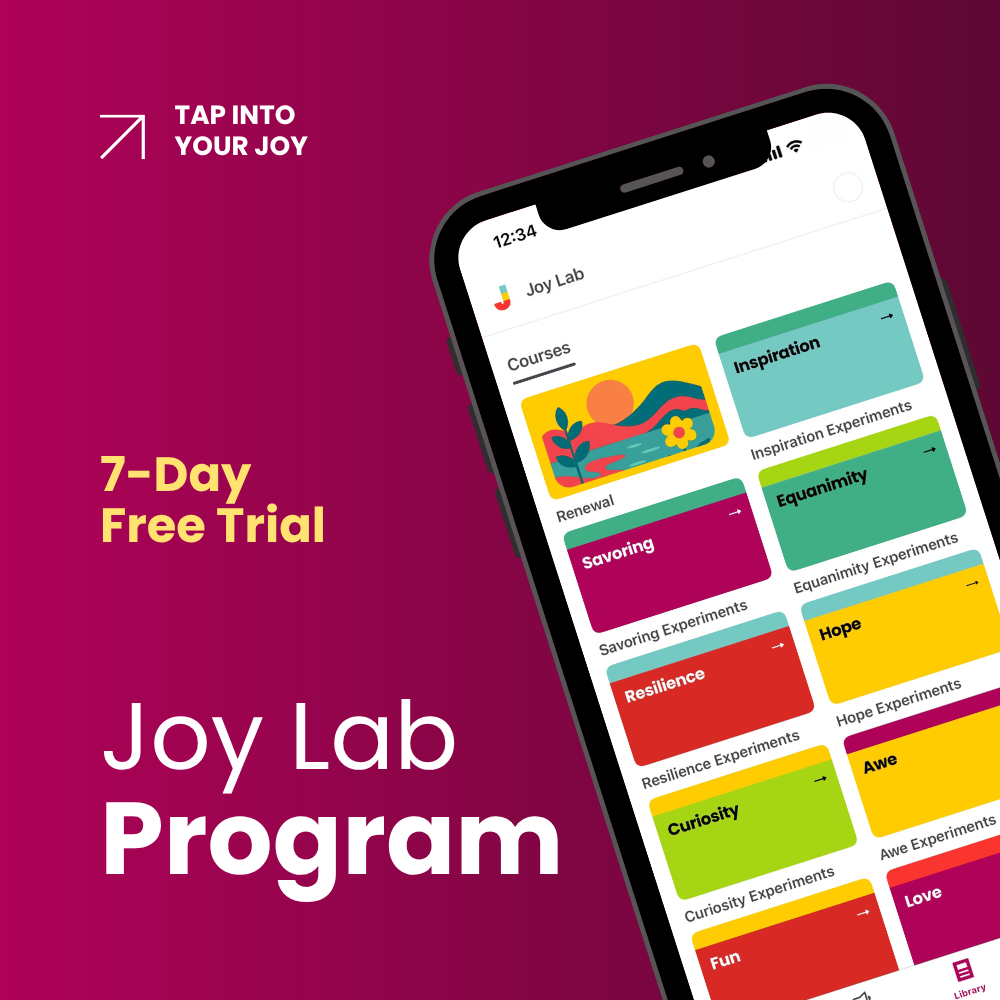
- Joy Lab Program: Take the next leap in your wellbeing journey with step-by-step practices to help you build and maintain the elements of joy in your life. Start your 7-day free trial now.
- Episodes in this Humility series:
- Book: Humble by Daryl Van Tongeren, PhD
- Tara Brach's website
- Find more about Neff's work on Self-compassion at Self-Compassion.org
- More on C.S. Lewis from the C.S. Lewis Foundation.
- Hagá & Olson. ‘If I only had a little humility, I would be perfect’: Children’s and adults’ perceptions of intellectually arrogant, humble, and diffident people. Access here.
- Nielsen & Marrone. Humility: Our current understanding of the construct and its role in organizations. Access here.
- Porter et al. Predictors and consequences of intellectual humility. Access here.
- Van Tongeren et al. Humility. Access here.
- Weidman et al. The psychological structure of humility. Access here.
- Wright et al. The psychological significance of humility. Access here.
- Wendell Berry's book Standing by Words