The Opposite of Depression Might Not Be Happiness. It Might Be Play.
Aug 05, 2026💭 Go deeper: We talk more about this in episode #279 of the Joy Lab Podcast
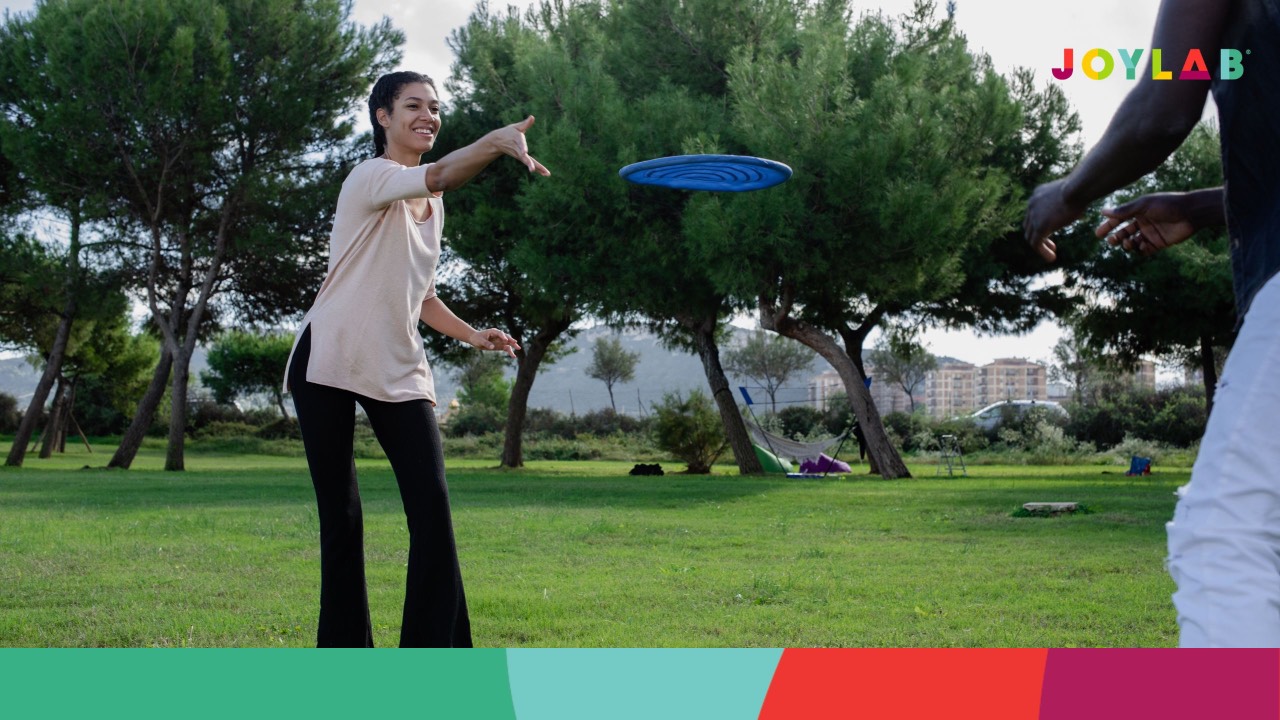
Play researcher Dr. Brian Sutton-Smith spent decades studying what play actually does for us. And one of his biggest, most freeing insights was this: adults need to play too. Not just kids.
"The opposite of play," he wrote, "is not work. The opposite of play is depression."
Isn't that refreshing?! It means play isn't a break from your "real life" and something you have to earn after the to-do list is done. It's part of your wiring and there's real evidence behind it.
Play and depression move in opposite directions. As play goes down, mental health struggles tend to go up. Part of why: people who play more tend to have a stronger internal locus of control. That means they have a felt sense of "I have some say in my own life." And when that sense of agency is weak, it's one of the clearest predictors of depression. And play isn't just about prevention. When people engage in play, self-reported depression goes down and that sense of agency goes back up, even for people who started out depressed. Play isn't just something that helps before things get hard. It can be a real tool, alongside other care options, to navigate mental health issues.
Your body is in on this too. Dr. Henry Emmons explains that play activates the brain's dopamine system. This matters since the loss of pleasure, or anhedonia, is one of the core signs he looks for when evaluating someone for depression. Play also supports something called BDNF (brain-derived neurotrophic factor), which helps new brain cells grow and survive. In other words: play is feeding your brain.
And it turns out, we're happiest together. Interesting research has found that people report being happiest on federal holidays, even retirees, who technically have leisure time every single day. It's not the holiday itself that does it. It's that those days nudge us out into public spaces, ease the pressure to be productive, and give us permission to be around other people. Which is a key ingredient of play: connection.
So if play still feels hard to justify, you're not alone. Some of that resistance is structural and real: plenty of people are working multiple jobs just to get by, with little leisure time to spare, and that's a genuine public health issue. But for many, the barrier isn't time. It's believing that play is a luxury, or immature, or something we should be able to go without if we're strong enough. It's not true! We need play and we need connection. Pair them together and really good things can happen.
As Dr. Sutton-Smith put it: "For decades there has been this assumption that children played and adults didn't. That's rubbish."
Sources and Notes:
- Joy Lab Program: Take the next leap in your wellbeing journey with step-by-step practices to help you build and maintain the elements of joy in your life.
- Series on authenticity from our Joy Lab podcast:
- Unmasking Your True Self: Exploring Authenticity and Awe [ep. 216]
- Embrace Your True Self: Accepted, Connected, & In The Game [ep. 217]
- The Road Most Travelled: Awakening Through Suffering [ep. 218]
- Follow Your Bliss: Awakening to Joy [ep. 219]
- The Still Small Voice: Awakening with soulfulness [ep. 220]
- More on Dr. Brian Sutton Smith from the National Institute for Play.
- Merz, J. & Osberg, L. (2006). Keeping in touch: A benefit of public holidays. Access here.
- Rosso, L. & Wagner, R. (2021). Causal Effect of Public Holidays on Economic Growth. Access here.